Nordic Frost Lab • Field Equipment Guide

Surviving and Thriving in Finland's Deep Sub-Zero Winter

From maritime southern gale freezes in Helsinki to sustained minus-thirty degree polar nights in Lapland, true thermal security depends on deliberate garment geometry, moisture dispersal, and certified thermal insulation.

Finnish Lapland snow-covered pine wilderness during polar winter frost Field Testing Station • Saariselkä, Finnish Lapland
Active Finnish Seasonal Baseline
-24°C Lapland Mean Low
100% Wind Barrier Req.
260g Min. Wool Weight

Layering failure in Finnish conditions occurs when sweat becomes trapped under impermeable outer shells. Follow the three-tier rule.

Winter Garment Categories

Five comprehensive technical guides documenting insulation types, moisture ratings, seam constructions, and field-tested gear combinations designed for Finnish snow conditions.

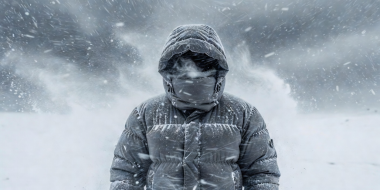
Heavy insulated arctic down parka with deep storm hood in sub-zero snow blizzard
01 / EXTERNAL DEFENSE Heavy Outerwear

Arctic Parkas & Sub-Zero Down Insulation

Long-line baffled construction, 700+ fill power down, and expedition-grade storm hoods crafted to repel polar blizzards and cutting Baltic winds.

  • Primary Shield: 20,000mm DWR Ripstop
  • Temperature Range: -10°C down to -40°C
  • Key Feature: Double insulated draft flap
Read Parka Field Guide →
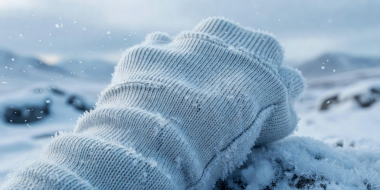
Close-up of pure technical merino wool base layer knit fabric in cold climate
02 / DERMAL BARRIER Base Layers

Merino Wool & Thermodynamic Next-To-Skin Layers

High-density Merino weaves between 200g/m² and 320g/m² that retain warmth while transporting sweat vapor away from pores before it chills.

  • Fleece Weight: 200–300 GSM Merino
  • Fiber Gauge: 18.5 Micron Ultra-fine
  • Seam Structure: Flatlocked friction-free
Read Base Layer Guide →
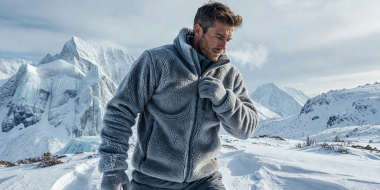
Technical high-loft fleece jacket mid-layer designed for alpine and Nordic insulation
03 / HEAT TRAP Mid-Layers

Technical Fleece, Shearling & Grid Mid-Layers

Trapping dead air without accumulating moisture. Discover why waffle-grid patterns and hybrid wool blends outperform dense single-ply synthetics.

  • Core Material: High-loft Polartec / Wool-Poly
  • Venting: Deep chest quarter-zips
  • Fit Profile: Athletic thermal envelope
Read Mid-Layer Guide →
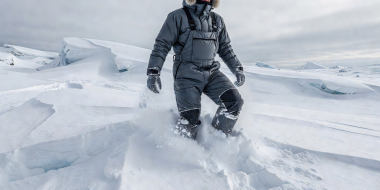
Waterproof insulated snow bib trousers navigating deep Arctic snowdrifts
04 / LOWER ENVELOPE Lower Body

Snow Trousers, Bibs & Membrane Storm Shells

Defending against deep snow drifts, slush splashes, and seated contact on freezing terrain with reinforced seat panels and integrated internal snow gaiters.

  • Waterproof Rating: 15,000–28,000mm hydrostatic
  • Gaiter Construction: Gripper-elastic snow locks
  • Reinforcements: 500D Cordura kick-patches
Read Snow Trousers Guide →
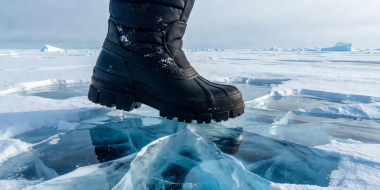
Heavy-duty winter snow boot with deep rubber traction lugs on Arctic ice
05 / EXTREMITIES Boots & Accessories

Insulated Boots, Trapper Beanies & Arctic Mittens

Where frostbite strikes first. Learn why vulcanized rubber winter boots, shearling trappers, and dual-chamber lobster mitts are mandatory above the Arctic Circle.

  • Sole Compound: Arctic Grip soft-rubber lug
  • Lining Density: 400g Thinsulate / Wool felt
  • Accessory Focus: Double-knit ribbed beanies
Read Boots & Accessories Guide →
Nordic Frost Lab Simulation

Interactive 3D Layering & Temperature Simulator

Toggle regional ambient temperature bands and activity levels to visualize the exact layer configuration needed to balance thermal comfort and metabolic ventilation.

0°C Slush -15°C Nordic Frost -30°C Arctic -40°C Polar
Activity & Metabolic Heat Output
Active Structural Layers
Outer Shield (Parka)
Mid Heat Trap (Fleece)
Base Merino Dermal
Storm Leg Shell
Sub-Zero Footwear & Mitts
Simulated Thermal Performance Balanced Safety Rating
3.4 CLO Insulation Factor
100% Viima Windchill Block
Optimal Vapor Diffusion Rate

This outfit configuration is primed for freezing stationary positions down to -20°C. Open underarm pit zips if moving continuously uphill.

Meteorological Science

Understanding "Viima" and the Maritime Frost of Southern Finland

While northern regions such as Inari and Rovaniemi experience dry, still continental cold down to -35°C, southern Finland—including the capital region of Helsinki, Espoo, and Turku—presents a radically different physiological challenge.

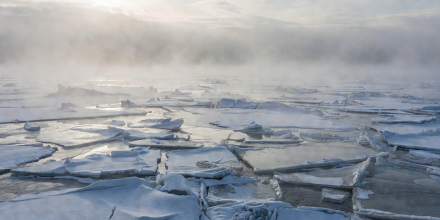
Freezing coastal Baltic Sea pack ice and cold fog off the Helsinki coast
Baltic Sea sea-smoke and coastal pack ice generating high-humidity freezing winds (viima).

The Finnish word viima denotes the penetrating, high-humidity Baltic wind that strips warmth from conventional knitwear in seconds. A dry temperature of -4°C in coastal Finland frequently feels as punishing as -18°C in northern pine forests due to 88% ambient relative humidity and persistent coastal gales. Effective apparel strategies demand a 100% wind-blocking outer membrane paired with non-collapsing hydrophobic insulation.

Finnish Winter Field Constants

51 Days
Average continuous polar night (Kaamos) experienced in Utsjoki without sun warmth.
100 Pa
Minimum aerodynamic air barrier resistance needed to neutralize coastal gale penetration.
-51.5°C
Record official low registered at Kittilä Pokka weather station in Finnish Lapland.